
Security roller shutters
Made-to-measure roller shutters for shops, offices and commercial units.
A security roller shutter is a curtain of interlocking metal laths that rolls into a box above an opening and runs down two steel guide rails to close it. It protects glazing and doors from break-ins, vandalism and weather, and can be manual or electric, solid, perforated or insulated.
- Shop & commercial shutters
- From £945 + VAT
- UK-wide
Get a free quote
Send the postcode and rough size. We reply with a guide price and book a free survey.
How security roller shutters work
Every shutter is made to the measured opening, so the box, guides and curtain are sized for your frontage rather than cut from stock. Aluminium laths keep the curtain light and quiet, while galvanised steel adds weight and resistance for higher-risk premises. Most commercial shutters are now electric, with a tube or direct-drive motor, a key switch and a manual override for power cuts. The shutter box can sit outside the opening, behind a fascia or inside the building, which affects both appearance and planning.
Bottom-rail locks, wind locks and anti-lift blocks stop the curtain being forced upwards or bowed out of its guides. A powder-coated finish in a RAL colour lets the shutter match a shopfront or cladding instead of standing out in bare metal. Where an insurer or police adviser asks for a tested product, rated shutters certified to LPS 1175 are available.
Electric shutters are commissioned with safety checks and a handover pack, so you have the paperwork for your records and your insurer. Perforated or punched laths let light and window displays show through while the shutter is down. Insulated double-skin laths reduce heat loss and noise through the opening, which helps unheated units and stock rooms.
Options we can specify
- Aluminium or galvanised steel laths, single or double-skin
- Manual push-up, hand-crank or electric operation
- Solid, perforated, punched or vision laths
- External, behind-fascia or internal shutter box
- Bottom-rail locks, wind locks and anti-lift blocks
- Powder coating to a RAL colour of your choice
- Key switch, remote control or timer operation
- Manual override for power cuts on electric shutters
- Safety edge or photocells where the risk assessment calls for them
- LPS 1175 rated options for higher-risk premises
Typical specification
| Curtain | Aluminium (single or double-skin) or galvanised steel laths |
|---|---|
| Operation | Manual push-up, hand-crank or electric tube / direct-drive motor |
| Finish | Mill, galvanised or powder coated to RAL |
| Fixing | Face-fixed or reveal-fixed; box external, behind fascia or internal |
| Security | Bottom-rail locks, wind locks, anti-lift; LPS 1175 rated options |
| Standards | BS EN 13241 product standard; BS EN 12453 safety in use for powered doors |
How much do security roller shutters cost?
Security roller shutters typically cost £945 to £3,595 ex VAT (£1,134 to £4,314 inc VAT) for the common sizes we fit, depending on width, operation, lath type and finish. Larger or specialist jobs are priced after survey.
| Option | Ex VAT | Inc VAT |
|---|---|---|
| Electric insulated shutter in a RAL colour, up to 3m | £2,145 to £3,595 | £2,574 to £4,314 |
| Electric shutter, opening up to 3m wide | £1,495 to £2,795 | £1,794 to £3,354 |
| Manual shutter, opening up to 2.5m wide | £945 to £1,795 | £1,134 to £2,154 |
Guide prices assume a straightforward opening with a power supply nearby. Your fixed price is confirmed in writing after the survey, before anything is ordered.
Work out your own guide price
Enter the width and height, choose the operation and lath type, and the quote tool draws your shutter to scale with a price range.
Rules that apply
What the law and planning system expect, by nation. We check these at survey.
Planning permission for shopfront shutters
England
In England an external shutter on a shopfront is usually treated as development that needs planning permission from the local planning authority, and a listed building also needs listed building consent. Many councils' shopfront design guides favour internal shutters, perforated or open-grille designs and boxes hidden behind the fascia, and some refuse solid external shutters in conservation areas and on main shopping streets.
Wales
In Wales an external shopfront shutter normally needs planning permission from your county or county borough council, or the national park authority, and a listed building also needs listed building consent. Welsh councils' design guidance often prefers internal or open-pattern grilles to solid shutters, particularly in conservation areas.
Scotland
In Scotland fitting an external security shutter to a shopfront normally needs planning permission from the council, and listed building consent if the building is listed. Councils often ask for the box to be concealed and for open or perforated designs rather than solid shutters in conservation areas.
Northern Ireland
In Northern Ireland planning permission for an external shopfront shutter is decided by your local council, which took over most planning decisions in 2015, and a listed building also needs listed building consent. Design guidance generally favours shutters that keep the frontage visible.
Safety of powered shutters
Powered doors and shutters are treated as machinery. The installer commissions them with a risk assessment, safety devices where the risk calls for them and force checks to BS EN 12453, then hands over a declaration of conformity and maintenance instructions. In workplaces, the employer or whoever controls the premises must keep doors maintained and safe for staff and visitors.
Electrical work
England
Electric shutters are wired to BS 7671, the IET Wiring Regulations. In homes in England, new circuits are notifiable under Part P of the Building Regulations, so the work is done by a registered electrician who can self-certify it, or notified to building control.
Wales
Electric shutters are wired to BS 7671, the IET Wiring Regulations. In homes in Wales, new circuits are notifiable under Part P of the Building Regulations as applied in Wales, so the work is self-certified by a registered electrician or notified to building control.
Scotland
Electric shutters are wired to BS 7671, the IET Wiring Regulations. In Scotland electrical work in buildings must also meet the Scottish building standards, and is carried out and certified by a qualified electrician.
Northern Ireland
Electric shutters are wired to BS 7671, the IET Wiring Regulations, by a qualified electrician. Northern Ireland has its own building regulations, and any building control requirement for the work is confirmed with your council.
What happens next
Send the details
Give us the postcode, approximate width and height, and what the shutter is protecting.
We survey the opening
An engineer measures and checks the fixings, power and any planning constraints.
You approve a fixed price
The quote lists the specification and price in writing, so there are no surprises.
We fit and commission
Your shutter is installed, tested and handed over with instructions and paperwork.
Security roller shutters: common questions
How long does a roller shutter take to fit?
Most single shopfront shutters are fitted in a day once they have been made. Wider frontages, steel-framed openings or new power supplies can add time, and we confirm the installation day with your quote.
Should I choose aluminium or steel?
Aluminium is lighter, quieter and resists corrosion, so it suits most shops and offices. Galvanised steel is heavier and harder to cut through, so it is often chosen for industrial units and higher-risk premises.
Can a roller shutter be fitted inside the shop?
Yes. Internal shutters sit behind the glazing, which protects the stock and usually avoids external planning issues, although the glass itself is left exposed.
Do electric shutters still work in a power cut?
Electric shutters are fitted with a manual override, usually a hand crank or a release, so the shutter can be opened or closed without power.
Will I need planning permission?
External shutters on commercial premises usually need planning permission, and listed buildings need listed building consent. We flag this at survey so you can apply before the shutter is ordered.
Is the survey free?
Yes, for new shutters, grilles and doors: the survey and written quote are free and there is no obligation to go ahead. Repair and servicing visits are charged, and we tell you the price before we visit.
Are your prices fixed?
Yes. After the survey you get a written price for the agreed specification, confirmed before anything is ordered or any work starts. If you change the specification, or a hidden problem such as a weak lintel is found during fitting, we price it and agree it with you before carrying on.
Related services
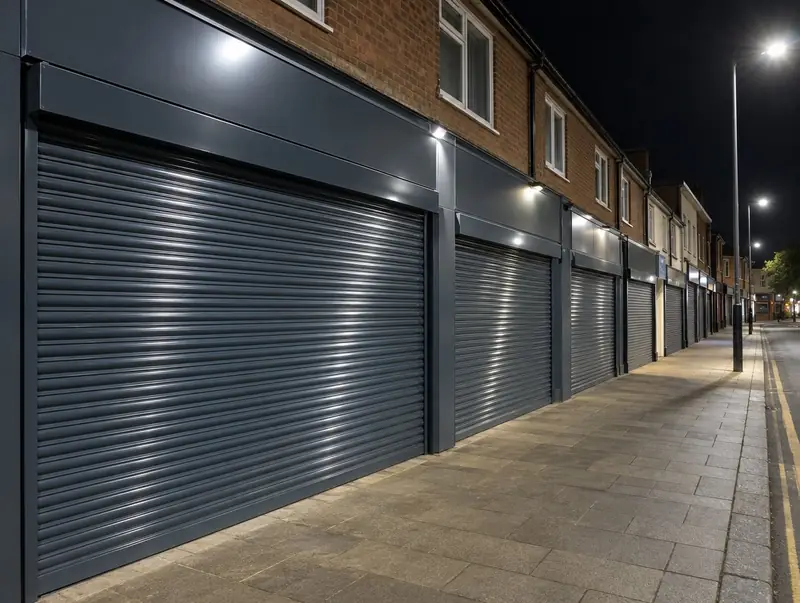
Shop front shutters
Shutters for high street shops, takeaways and offices, designed with planning in mind.
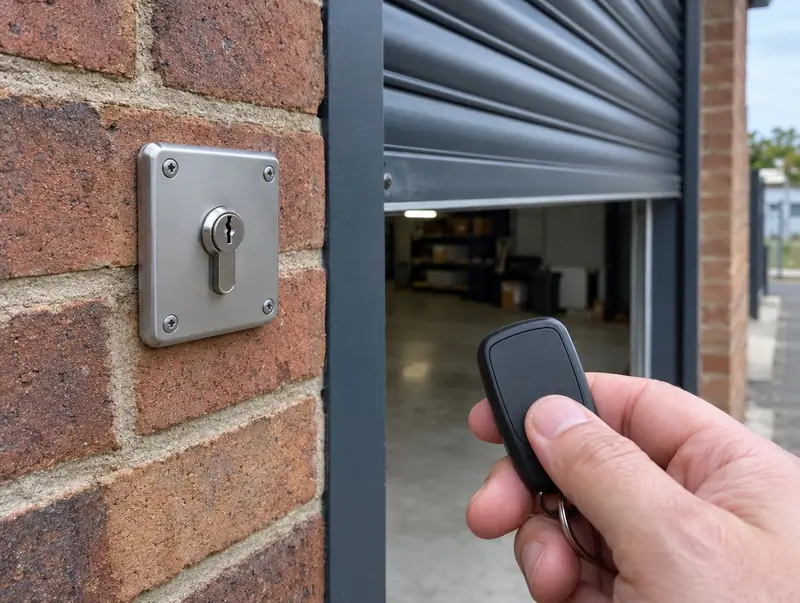
Electric roller shutters
Motorised shutters with key switch, remote or timer control and a manual override.
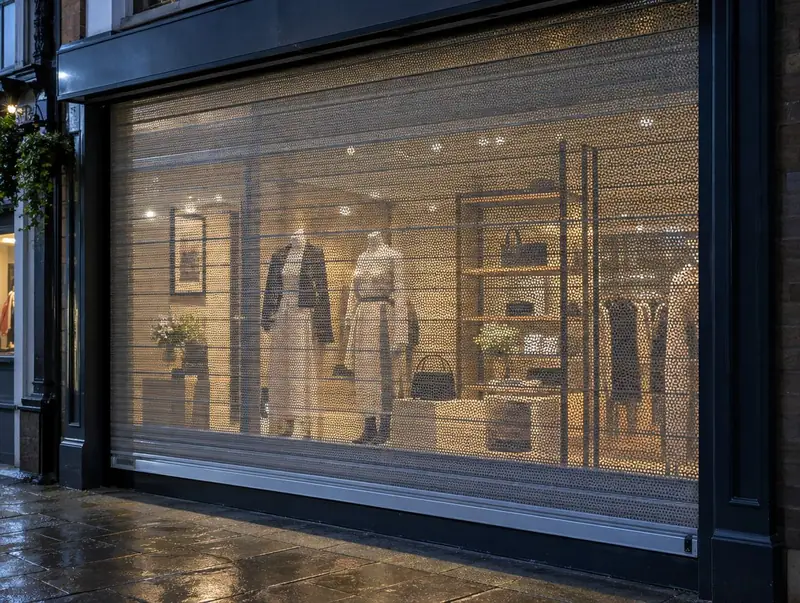
Perforated & punched shutters
Shutters with perforated, punched or micro-perforated laths so displays stay visible.
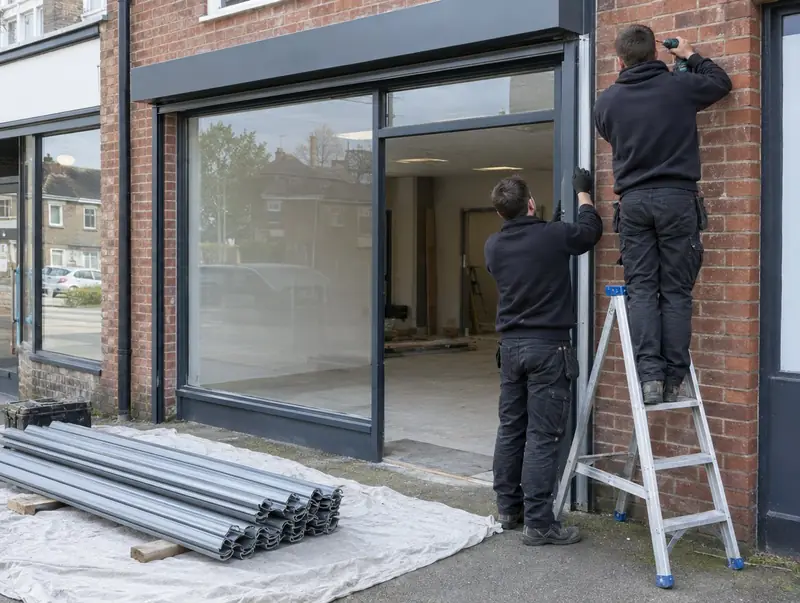
Roller shutter installation
Survey, supply and fit of new shutters, grilles and doors, with commissioning and handover.
Who uses security roller shutters
Security roller shutters near you
Choose your county or area for local details and towns we cover.
England
- Bedfordshire
- Berkshire
- Bristol
- Buckinghamshire
- Cambridgeshire
- Cheshire
- Cornwall
- Cumbria
- Derbyshire
- Devon
- Dorset
- County Durham
- East Riding of Yorkshire
- East Sussex
- Essex
- Gloucestershire
- Greater London
- Greater Manchester
- Hampshire
- Herefordshire
- Hertfordshire
- Isle of Wight
- Kent
- Lancashire
- Leicestershire
- Lincolnshire
- Merseyside
- Norfolk
- North Yorkshire
- Northamptonshire
- Northumberland
- Nottinghamshire
- Oxfordshire
- Rutland
- Shropshire
- Somerset
- South Yorkshire
- Staffordshire
- Suffolk
- Surrey
- Tyne and Wear
- Warwickshire
- West Midlands
- West Sussex
- West Yorkshire
- Wiltshire
- Worcestershire
Scotland
Ready for a fixed price?
Free survey, made-to-measure shutters and a written quote before any work starts.